
Keywords
Institutional repositories
2030 Agenda
Open access
Sustainability
How to Cite
Abstract
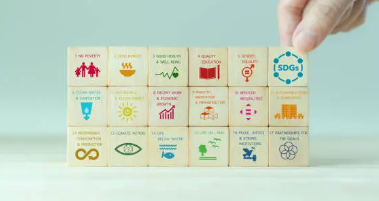
ntroduction: The accelerated growth of digital information and the need to ensure authenticity, integrity, and long-term accessibility of scientific production highlight the importance of digital preservation in contemporary society. Institutional Repositories (IRs) play a strategic role in supporting Open Access (OA), promoting transparency, and strengthening information governance. The United Nations 2030 Agenda reinforces this perspective by emphasizing that sustainable development depends on reliable, inclusive, and sustainable informational infrastructures.Objective: To analyze how digital preservation and IRs function as accelerators of the Sustainable Development Goals (SDGs), especially SDGs 4, 9, 10, 12, 16, and 17.Methodology: This qualitative, exploratory, and descriptive study is based on bibliographic and documentary review. National and international frameworks (LAI, Open Data Policy, ISO 16363, UNESCO, UN) and literature related to digital preservation, OA, interoperability, and information governance were examined. Part of the analytical corpus derives from the author’s dissertation, articulating categories such as preservation, visibility, equity, and sustainability. Results: The findings reveal that IRs operate as essential sociotechnical infrastructures to democratize access to knowledge, strengthen educational practices, promote technological innovation, reduce informational inequalities, optimize institutional resources, and increase transparency. IRs also enhance partnerships and internationalization by adopting interoperability standards such as DOI, ORCID, OAI-PMH, METS, and PREMIS. These contributions directly support the SDGs analyzed.Conclusion: IRs transcend their traditional archival role and emerge as strategic instruments for sustainable development. By integrating digital preservation, OA, and information governance, they contribute to more inclusive, innovative, and sustainable knowledge ecosystems aligned with the principles of the 2030 Agenda.
References
BAUMAN, Zygmunt. Modernidade líquida. Rio de Janeiro: Zahar, 2001.
BORGMAN, Christine. Big Data, Little Data, No Data: Scholarship in the Networked World. Cambridge: MIT Press, 2015.
BRASIL. Lei nº 12.527, de 18 de novembro de 2011. Lei de Acesso à Informação. Diário Oficial da União: seção 1, Brasília, DF, 18 nov. 2011.
BRASIL. Política de dados abertos do poder executivo federal. Brasília, DF: Ministério do Planejamento, Desenvolvimento e Gestão, 2016. Disponível em: https://dados.gov.br/pagina/politica-dados-abertos. Acesso em: 18 nov.2025.
BRASIL. 4º Plano de ação nacional em governo aberto. Brasília, DF: Controladoria-Geral da União, 2018. Disponível em: https://www.gov.br/cgu/pt-br/assuntos/transparencia-publica/governo-aberto/planos-de-acao. Acesso em: 18 nov.2025.
CAPES. Ciência aberta e internacionalização. Brasília, DF: CAPES, 2022.
CASTELLS, Manuel. A sociedade em rede. São Paulo: Paz e Terra, 1999.
HEY, Anthony John Grenville ;TREFETHEN, Anne Elizabeth. The data deluge: an e-science perspective. Oxford: Oxford University Press, 2003.
ISO 16363:2014. Audit and Certification of Trustworthy Digital Repositories. Geneva: International Organization for Standardization, 2014.
LÉVY, Pierre. A inteligência coletiva. São Paulo: Loyola, 2015.
LYMAN, Peder.; VARIAN, Hal Ronald. How much information?. Berkeley: University of California, 2003.
ONU. Agenda 2030 e os objetivos do desenvolvimento sustentável. Nova York: Organização das Nações Unidas, 2024.
PINFIELD, Stephem. Making open access work. Oxford: Chandos Publishing, 2015.
SAYÃO, Luís Ferando. Preservação digital: desafios e estratégias. Ciência da Informação, Brasília, 2010.
SILVA, Fabiana de Oliveira. Contribuição da curadoria digital para repositórios institucionais: preservação, visibilidade e análise comparativa entre o Arca (FIOCRUZ), o RepositóriUM (UMINHO) e o RI do IFTM. 2025. 223 f. Dissertação (Mestrado Profissional em Educação Tecnológica) – Programa de Pós-Graduação em Educação Tecnológica, Instituto Federal de Educação, Ciência e Tecnologia do Triângulo Mineiro, Uberaba, 2025

This work is licensed under a Creative Commons Attribution 4.0 International License.
Copyright (c) 2026 Fabiana de Oliveira Silva, Bruno Pereira Garcês (Autor)